
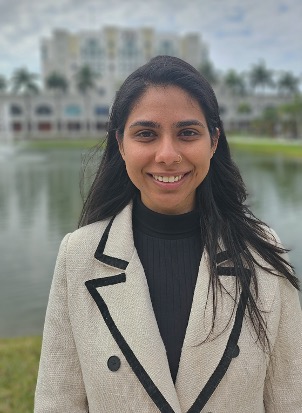
Rushali Dargan, Ph.D.
Rushali is a post-doctoral researcher specializing in employing chromatographic techniques to analyze volatile compounds within forensic settings, with a specific emphasis on decomposed odor analysis. Her research aims at identifying compounds that could be valuable to detection dogs and their handlers, providing key insights for refining working dog training protocols.
Research areas:
– Comparing the decomposition odor between cadavers and human remains used as cadaver detection dog training aids.
– Validating the use of amputated limbs for their use as cadaver detection dog training aids.
– Using ethically sourced training aids for cadaver detection dog training.
Education:
– Ph.D., Biochemistry (Forensic Taphonomy), Université du Québec à Trois-Rivières, Canada
– M.Sc., Forensic Science, University of Technology Sydney, Australia
– B.Sc., Biotechnology, Genetics, Chemistry, Jyoti NivasCollege Autonomous, Bangalore University, India
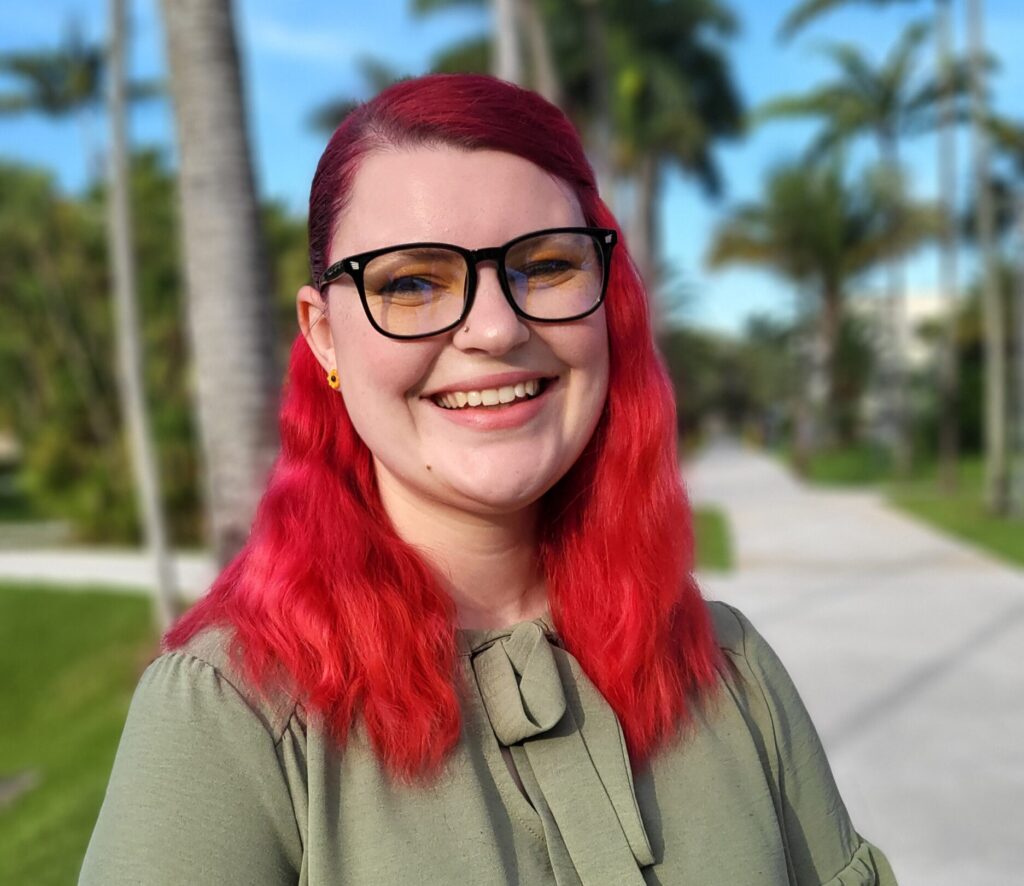
Fantasia Whaley
Fantasia received her bachelor’s degree at Florida International University in Chemistry in 2021 and shortly thereafter, joined the DeGreeff lab to pursue a PhD in Chemistry. Her research looks at the evolution of the volatile organic compounds during early human decomposition in relation to human remains detection canines as well as search and rescue canines. She plans to determine when living human scent becomes human remains odor shortly after death. This is split up into three separate aging projects: fresh blood to aged blood, living rat scent to remains rat scent as a surrogate for humans, and lastly living human scent to human remains odor.

Katherine Castro
Katherine graduated with a BS in Forensic Science from Roger Williams University in May 2021. Since starting FIU in August 2021, she has presented her research at several conferences and has been awarded the David A. Atkinson Memorial Scholarship in September 2023 at the International Symposium on the Analysis and Detection of Explosives. Her research currently investigates the odor contamination of explosive canine training aids and contamination mitigation strategies. She is also working on the development of GC-MS methods for explosive training aid validation to be implemented by standardization organizations.
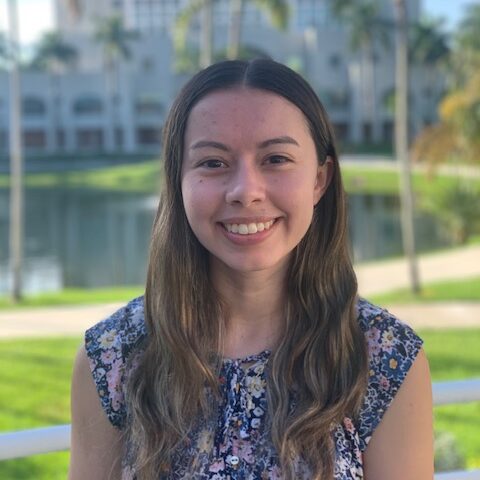
Kayla Hogan
Kayla is a second-year Chemistry Ph.D. student at Florida International University, currently working under Dr. Lauryn E.
DeGreeff and Dr. Kenneth G. Furton. She received her Bachelor of
Arts degree in Chemistry at Florida International University in the Fall of 2021. In her research, she is working on a cross-contamination project to assess the permeability of volatile organic compounds in different types of primary containers over a period of time using SPME-GC/MS. In addition, she’s working on developing a fentanyl canine training aid mimic. Outside of her research, she loves to run and is currently training for her first marathon.
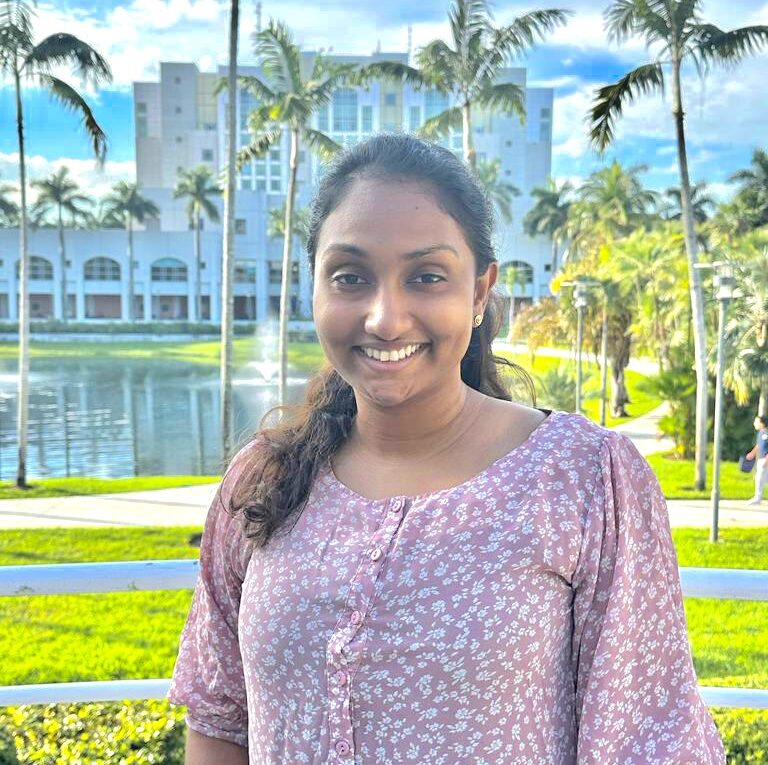
G.D.Thouli Jayawardana
Thouli is a graduate student at Florida International University, studying for her Ph.D. in Chemistry with a Forensic Science concentration. She earned her bachelor’s in Chemistry from Sabaragamuwa University of Sri Lanka in 2019. She has been a member of Dr. Lauryn E. DeGreeff’s research group since Spring 2023. Funded by the National Institute of Justice and in collaboration with the Naval Research Laboratory, Thouli’s research aims to enhance the detection capabilities of the Ion Mobility Spectrometer, through an innovative pre-concentration technique, using an acrylate-based polymer coated on Silicon Nanowire arrays. She is researching to explore the feasibility of polymer coatings to pre-concentrate the vapor surrogates associated with illicit substances such as fentanyl, designer benzodiazepines, cocaine, heroin and triacetone triperoxide (TATP).

Diagoro Greco
Daigoro was born in Italy, where he attended the Lucio Piccolo High School for science and math, receiving national honors upon graduation, and subsequently enrolled at the Universita’ degli Studi di Parma with a major in biology for two years. He later moved to the United States in 2018, changing his major to chemistry and ultimately receiving a bachelor’s degree with magna cum laude from Florida International University. In 2023, he was accepted in the Florida International University’s graduate program, where he is currently pursuing a doctoral degree in chemistry with a forensic subspecialization. His research is focused on the characterization of volatile organic compounds in human remains and canine performance, with an accent on the effect and degree of extensive fire damage in terms of chemical and odor profiles.
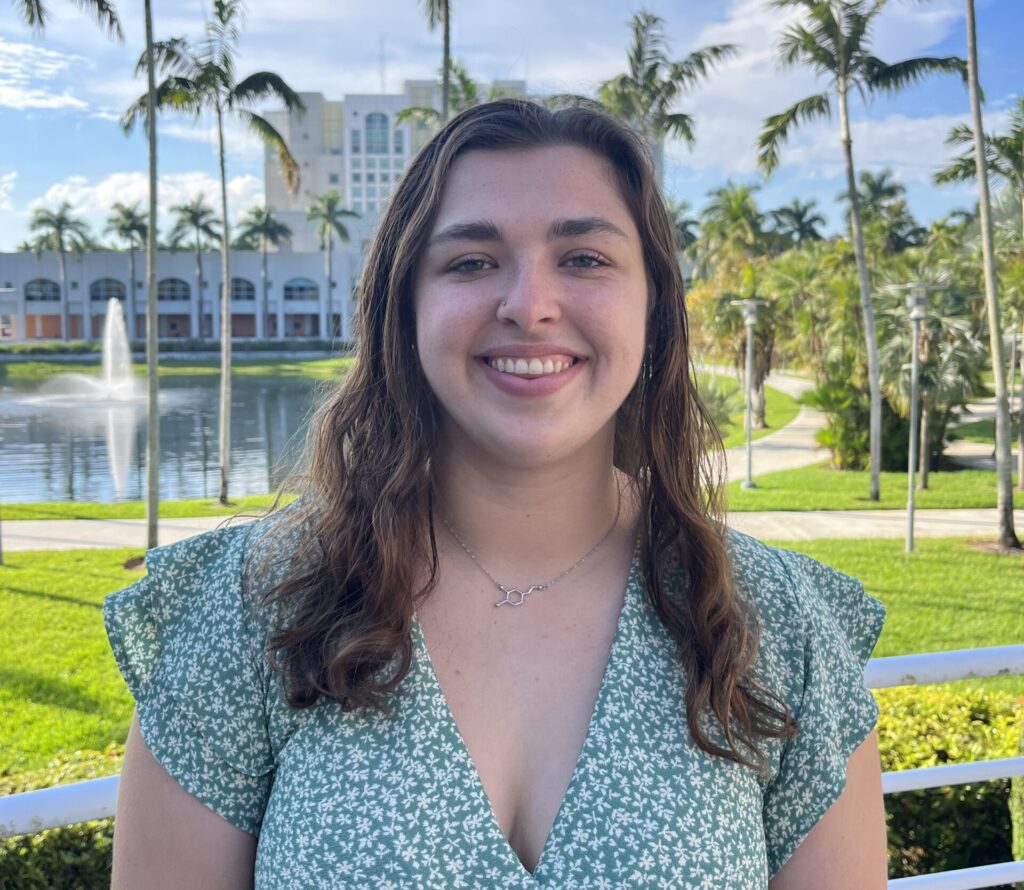
Sadie Olrogg
Sadie is a graduate of the State University of New York at Fredonia with a B.S. in Chemistry. Her research background during her undergraduate career includes inorganic synthesis and characterization as well as GC-MS analysis. She started the Ph.D. in Forensic Chemistry program in the fall of 2023. She is now working with Dr. DeGreef-Silk to create a functionalized glass fiber for use in headspace analysis, specifically for targeting illicit drugs and explosives.
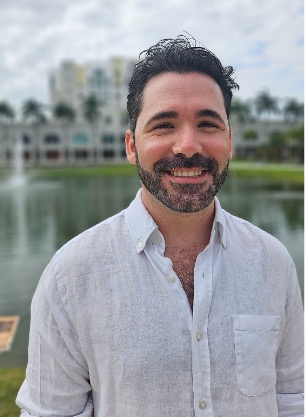
Fernando Zaldívar Eyre
Fernando is a third-year PhD candidate in Chemistry at Florida International University, where he earned his B.S. in Chemistry in 2021 and is concurrently completing an M.S. in Forensic Science. He joined Dr. Lauryn DeGreeff’s and Dr. Kenneth Furton’s research groups in Fall 2024 to pursue substrate optimization for canine training aids.Since September 2024, Fernando has worked as a Graduate Research Assistant on two CARFS-funded projects. The first project evaluates the efficacy of various sorbent substrates in collecting and dissipating common canine target analytes, while the second assesses each material’s resistance to non-target contamination under realistic field conditions. His collaborative efforts with Natalia Gutierrez, Eduardo Moreira, Dr. DeGreeff, and Dr. Furton involve generating comparative adsorption/desorption kinetics, competition and contamination-resistance profiles to inform best practices in training aid development.
Fernando has shared his work through an oral presentation at the CARFS Symposium in Largo, FL (February 2025) and poster presentations at the American Academy of Forensic Sciences Annual Conference in Baltimore (February 2025) and Pittcon in Boston (March 2025). Outside the lab, he enjoys traveling and sampling local cuisines wherever his research takes him.
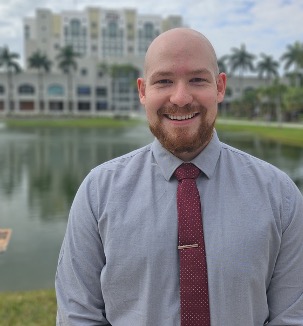
Joel Fuentes Carrasco
Former Students:
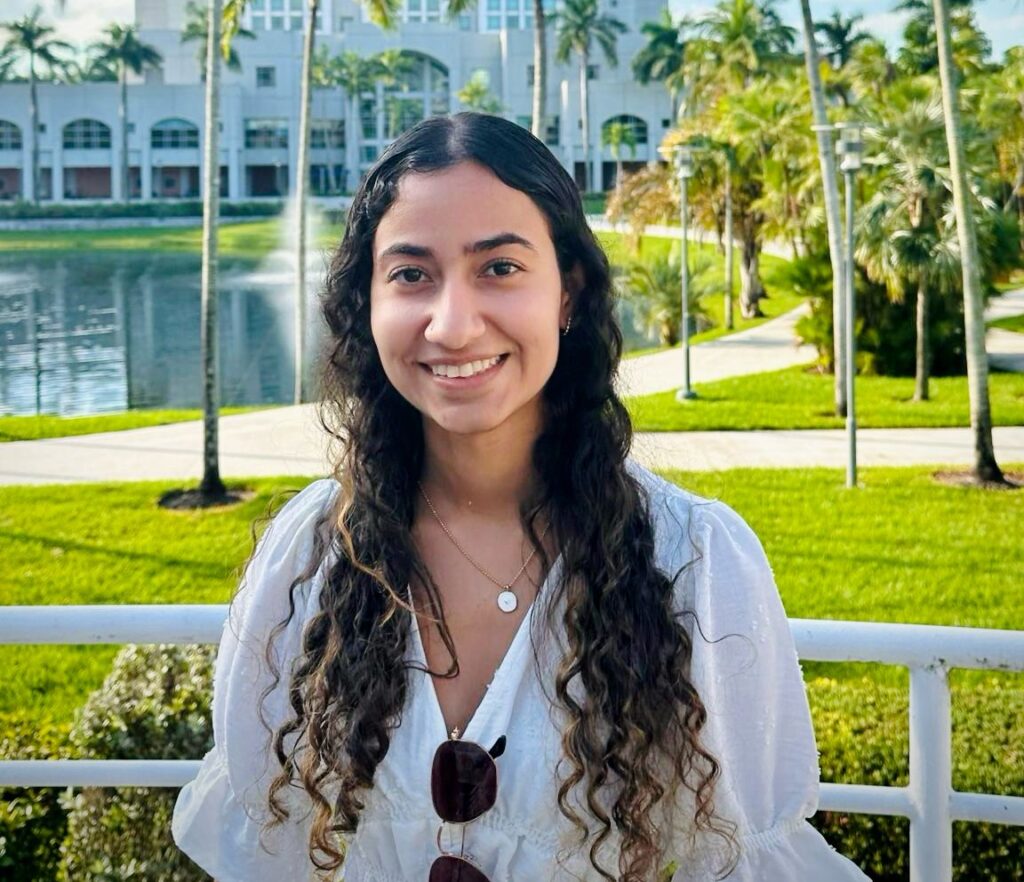
Janet Crespo Cajigas [Graduated Spring 2024 – Currently Visiting Scientist with the FBI Laboratory Division]
Janet is a senior graduate student at Florida International University (FIU) working towards her Ph.D. in Chemistry with a track in analytical forensic science under the supervision of Dr. Kenneth G. Furton and Dr. Lauryn E. DeGreeff. Her research is focused on odor chemistry as well as the scientific support of canine detection with projects such as the development of cross-contamination sensors for canine training aids, the geographical sourcing of marijuana from its odor profile, and the use of human hand odor as a non-invasive diagnostic tool for COVID-19. Janet earned her bachelor’s degree (B.S.) in Chemistry in 2019 from the University of Puerto Rico at the Mayagüez (UPRM) and her master’s degree (M.S.) in Chemistry in 2022 from FIU. She has participated in multiple research internships since 2015 at various locations including UPRM, the U.S. Naval Research Laboratory (NRL) and the Federal Bureau of Investigation (FBI). Janet has presented her research at various national and international meetings including the World Police Summit, the American Academy of Forensic Science, American Chemical Society, and the Canine Detection and Olfaction Science conferences. She has one patent filed, another patent pending, and is an author in four peer-reviewed publications. When not involved in all things Chemistry, Janet can be found reading, crocheting or traveling.
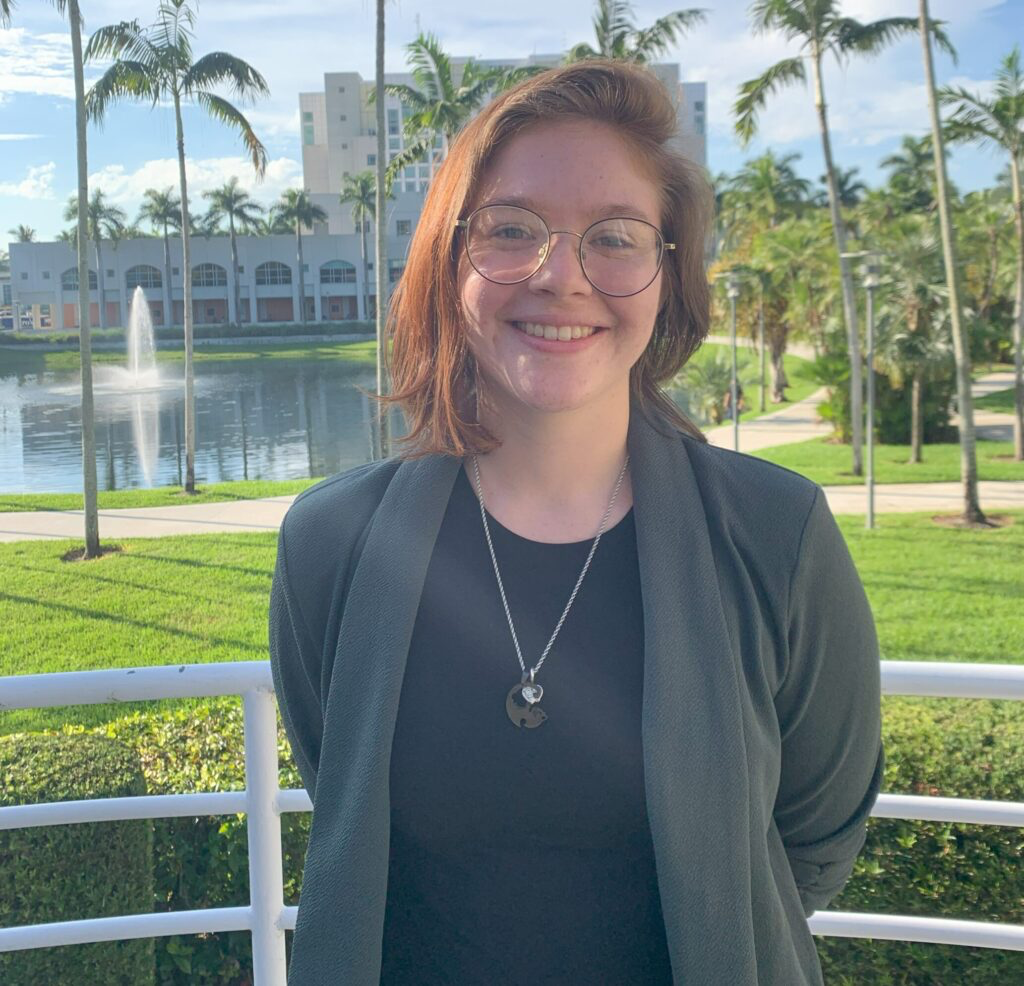
Michelle Karpinsky [Graduated Summer 2025]
Michelle is a fourth year PhD. candidate at Florida International University working in both Dr. DeGreeff’s and Dr. Furton’s labs. She graduated from Saint Francis University with a BS in chemistry with a focus on forensics and from FIU with a MS in chemistry. She is currently researching the headspace profile of crude oils using solid phase microextraction (SPME) and gas chromatography mass spectrometry (GC-MS). She is interested in determining how the headspace of fresh crude oil differs based on the origin of the oil as well as how the profile changes as it undergoes weathering, specifically when submergence of the crude oil occurs. Additionally, she is trying to determine the odorants or groups of odorants canines are using to detect subsurface and submerged oil to help create better training aids for oil detection dogs. She has also worked with samples from the Surfside building collapse to determine possible contaminates search and rescue canines may have been exposed to while working the scene. She has presented at different conferences during her time at FIU, most notably at the International Oil Spill Science Conference, the American Academy of Forensic Science, and K9 Sci Con. When Michelle is not in the laboratory running experiments, she is either reading, drawing, and/or relaxing with her cats.
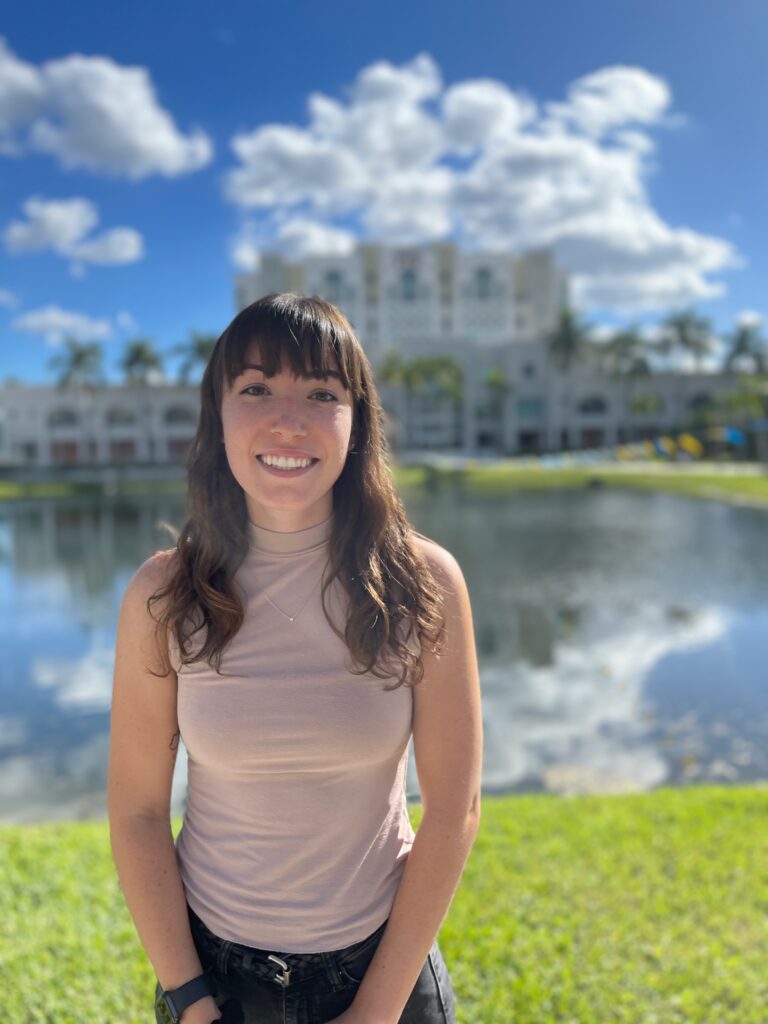
Emma Calabrese [Graduated Summer 2025]
Emma has been a member of Dr. Lauryn E. DeGreeff’s research group, as well as Dr. Kcenneth G. Furton’s group, since the fall of 2020. She has since received a master’s in chemistry and, now in her fourth year, is a PhD candidate. Her dissertation projects investigate the adsorption and absorption of vapors from explosive and drug related compounds to various substances that may prove to hinder detection efforts. One part considers the materials that may be used to package or contain explosives or drugs as means of concealing them, the other focuses on the soil and environmental conditions that an explosive device may be buried in. Her work seeks to better understand circumstances when vapor-based detection methods, such as scent detection canines, are most likely to be successful and are most likely to be limited by vapor availability. She has been able to participate in an internship program with Dr. Ryan Johnson of the Naval Research Laboratory in the summers of 2022 and 2023, in which they focused on computational models to simulate the burial of DNT to complement her laboratory experiments. Emma also previously took part in undergraduate research at The College of New Jersey while earning her bachelor’s degree, and in a summer REU program at Michigan State University. Outside of the lab, she relaxes by crocheting and drinking tea.