

Throughout the years, the judicial system has turned and twisted in order to adapt and evolve in the face of many progressive changes. Physical barriers were eliminated in the courtroom to accommodate for wheelchairs; a new array of doctors was included to offer physical and mental treatments to detainees; sign language interpreters were included as contractors to guarantee linguist presence for all.
Title II of the Americans with Disability Act (ADA) protects people living with a disability so they are not excluded or discriminated against within judicial entities, government agencies, and more. The list of what is considered a disability is long and diverse:
- Cancer
- Diabetes
- Post-traumatic stress disorder
- HIV
- Autism
- Cerebral palsy
- Deafness or hearing loss
- Blindness or low vision
- Epilepsy
- Mobility disabilities such as those requiring the use of a wheelchair, walker, or cane.
- Intellectual disabilities
- Major depressive disorder
- Traumatic brain injury
The ADA covers many other disabilities not listed here. It roughly includes physical or mental impairment that substantially limits day-to-day life activities. It is easy to spot a person in a wheelchair or a blind lady with a service dog.
But what happens when your disability is not visible?
Neurodiversity is a term coined by an Australian sociologist to recognize that no two brains work identically. Among neurodivergent disorders, we can find:
| Autism | Dysgraphia | Irlen Syndrome |
| Dyslexia | Down Syndrome | Epilepsy |
| Tourette syndrome | Intellectual Disabilities | Sensory processing Disorder |
| Dyspaxia | Synesthesia | Asperger Syndrome |
| Dyscalculia | Anxiety | Other neurodiversity examples |
| ADHD | Biopolar Disorder | Schizophrenia |
Neurodivergent individuals are at a disadvantage in the legal system. They experience differences in mental function, learning styles, sensory processing, communication styles, and behaviors. They may struggle with soft skills such as emotional intelligence, social interactions, or the ability to work effectively in a group. Their brains perceive the world differently. They don’t display intuitive reactions and struggle to understand social rules. Autism Spectrum Disorder is one of the many in the list of neurodivergences, and people in the spectrum also interact with the law. However, their needs are being overlooked within the judiciary.
In most cases, autistic individuals go through the different stages of the criminal process mechanically, without being treated as ‘vulnerable individuals’ and offered the necessary support. ADA lists Autism as a disability, and still, after a diagnosis has been vocalized early on, there is no meaningful change in terms of support offered.
The judicial interpreter and neurodivergence

Adding insult to injury, minorities on the spectrum have it worse, especially those who don’t speak the language. They would be offered a court interpreter trained on how to bridge the linguistic gap between the system and the Limited English Speaker (LES). However, they lack the expertise to modify how to communicate with neurodivergent individuals accordingly.
Everyone deserves to be on equal footing and to have the same access to communication. Professional court interpreters possess a native-like fluency level of English and a foreign language in order to assist in the communication process between the speakers.
Interpreters are not expected to modify, embellish, or in any way change the message to be rendered. The speaker’s nuances and level of formality should be accurately reflected as well. The interpreter must interpret the original source material:
- Preserving the language register, style, tone, and intent of the speaker.
- Preserving impartiality and confidentiality.
- Without editing, summarizing, deleting, or adding.
The role of the interpreter is vital for the system. It guarantees the linguistic presence of people who otherwise would remain oblivious to what’s going on. An accurate interpretation might be the difference between a life sentence and a non-guilty jury’s verdict. It is a heavy weight to carry.
Notwithstanding its important function, the interpreter is tightly limited in his or her role. He/she must make his/her presence unnoticeable to avoid jury distractions or distortion of non-verbal communication. He/she must control the flow of the conversation in order to guarantee an accurate rendition of what was said while juggling multiple cognitive functions, note-taking, and voice control, among other tasks.
The interpreter does not account for ‘masking’, eye contact, scripting, repetitive language, or any other communicative challenge the autistic individual presents.
A Band-Aid… at least.
However, there is hope. There are a few tweaks and tricks the language professional could put in motion in order to facilitate communication and understanding during the legal proceedings.
Courtroom setting calls for three principal modes of interpretation, that is:
- Consecutive interpreting
- Simultaneous interpreting
- Whispering interpreting.
It would be best to use only the consecutive mode, which is the one used in a question-and-answer setting. The speaker would pause after each utterance to allow the interpretation to occur.

Tip(s)
-allow for the pause to set in; speak slowly and give time to the autistic individual to process what you (the interpreter) have just said. The signs that someone is paying attention will be different for different people, so make sure to gauge for that during the pre-session.
-use the pause to make sure you capture his/her attention before rendering the message.
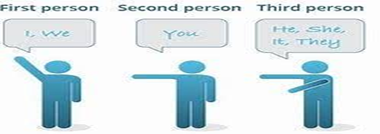
It is important to understand that legalese, the formal and technical language used in legal settings, is complicated for everyone alike. Therefore, the most important portion of the assignment will always be the pre-session. The interpreter should be allowed to interact with the speaker beforehand, always in the presence of an attorney, of course, to introduce his/herself and assess dialect, accents, and pronunciation differences. In using an interpreter, the speaker must address each other directly, ignoring the physical presence of the language professional. This could prove challenging for a neurodivergent individual, who would struggle to understand how to handle a conversation between two speakers with three individuals involved

Tip(s)
–always begin your rendition with the name of the autistic individual so he/she will know for sure who you are talking to.
Legal mumbo jumbo is notoriously difficult to understand. Key features of classic legalese include long, rambling, intricated sentence structures utilizing passive voice and obsolete formalisms. There is also the usage of Latin phraseology.
Tip(s)
–take control of your session from the get-go; force short utterances; request simpler synonyms and the use of active voice.
-use simple sentence structures.
-repeat keywords as often as possible.
Takeaway
The judicial system still has a long way to go to properly serve all individuals equally. The neurodivergent community deserves inclusivity and fairness just as much as anyone else. No profession is so monolithic as not to offer any flexibility and space for improvement. Take that space.
As a court interpreter, you can add your grain of sand. It matters tremendously how interpreters help individuals understand and be understood. Explore the resources available to expand your knowledge of developmental/neurological disorders, and think of the many ways you can be of help.