We have been discussing the world of Warbound at length now, but I admit that this world is lacking in visual identity.
Without a firm and consistent aesthetic, Warbound as a setting loses direction and distinctiveness, and it in turn robs the ability to inspire a unique vision in readers or writers. Where words can fail to bridge the gap between fantasy and reality, images can span it altogether with the power of illustration!
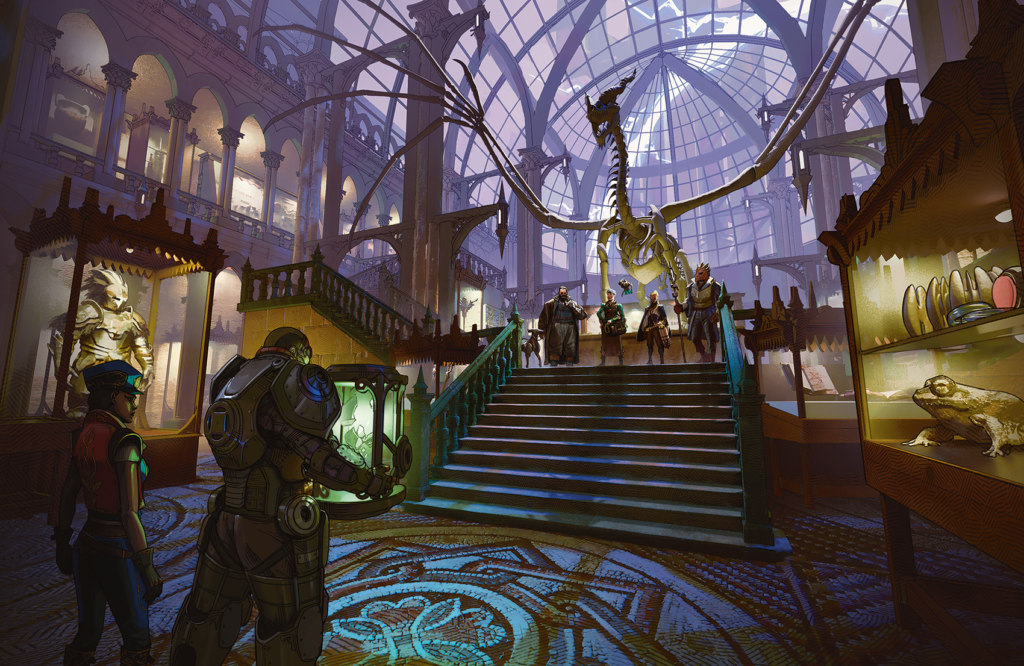
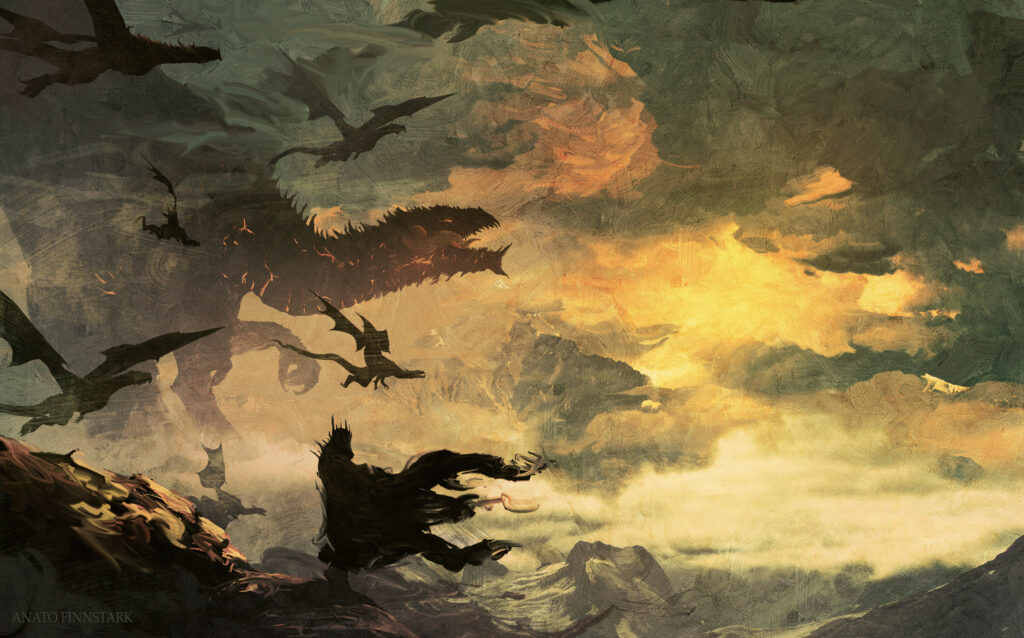
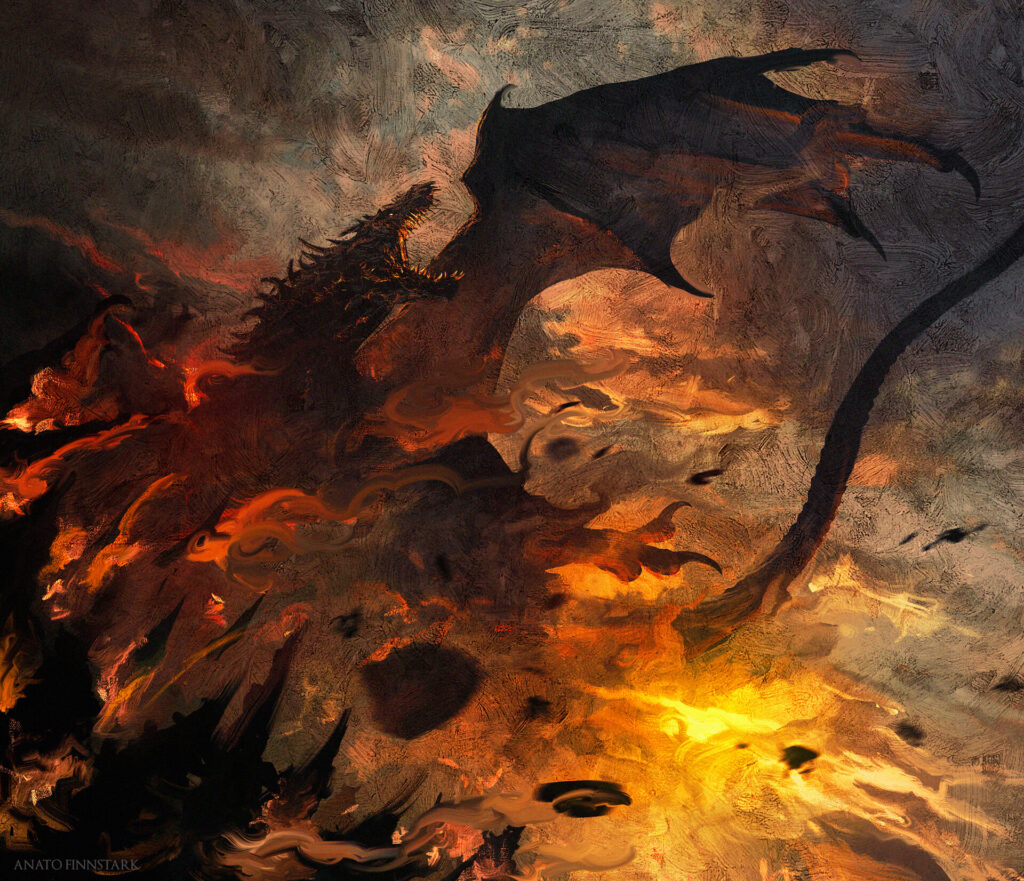
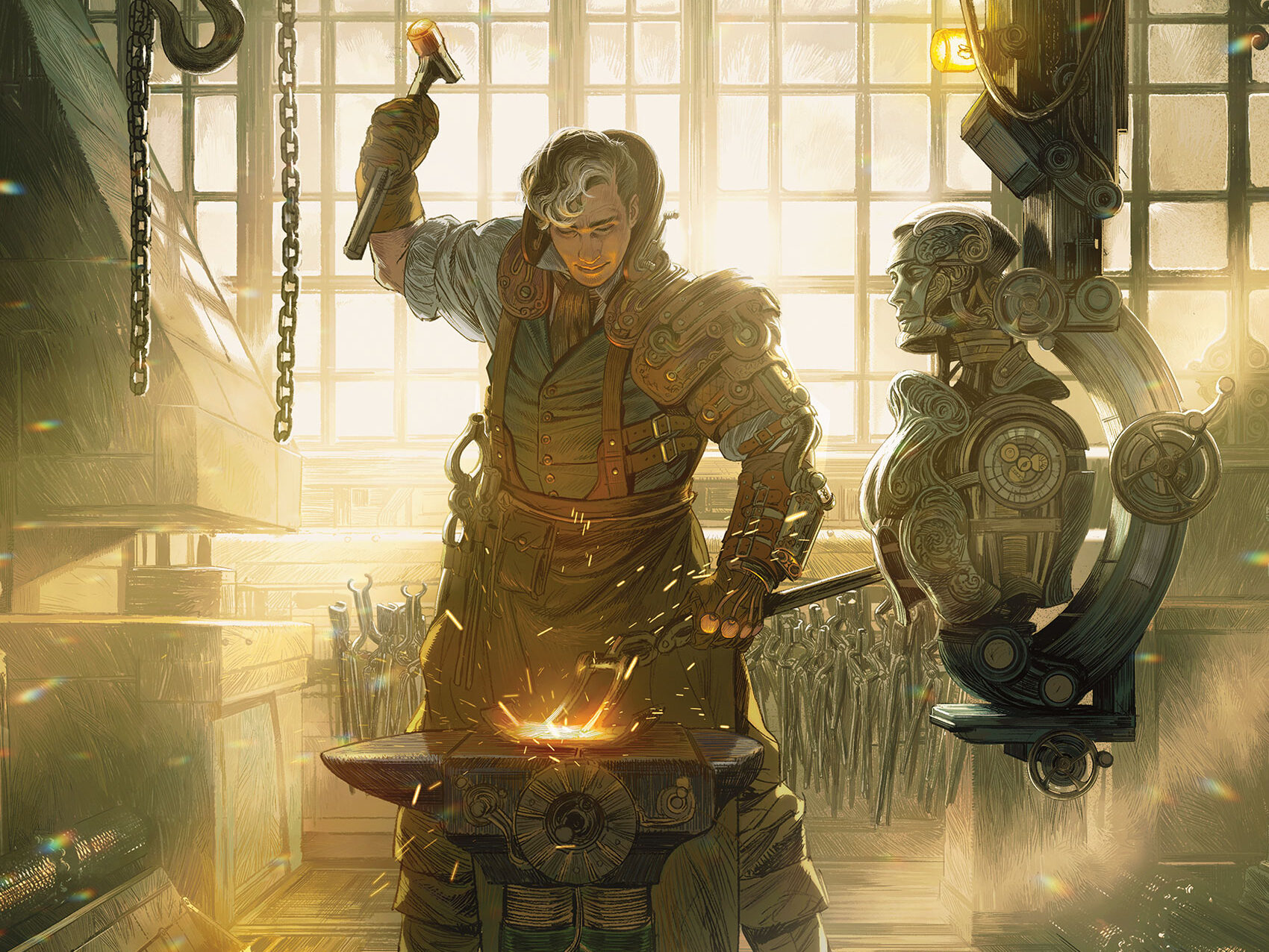
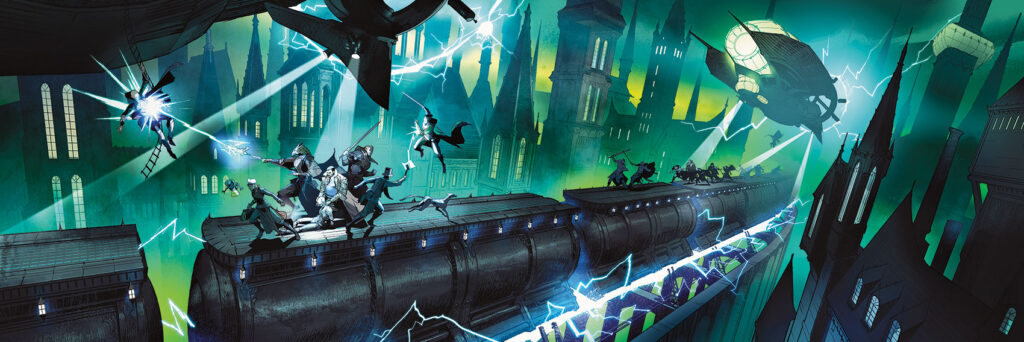
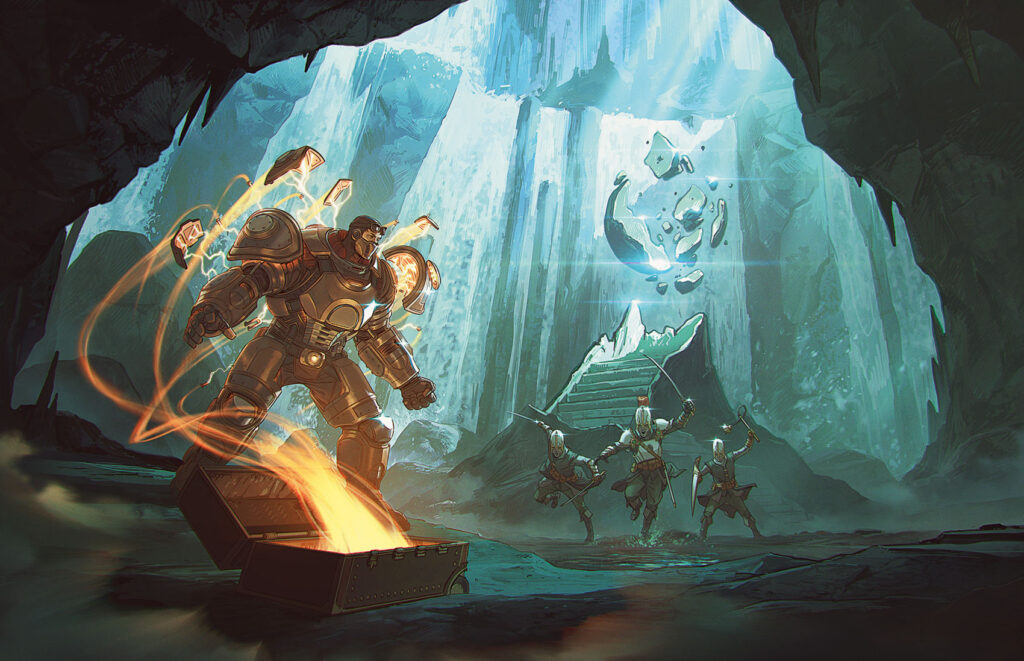
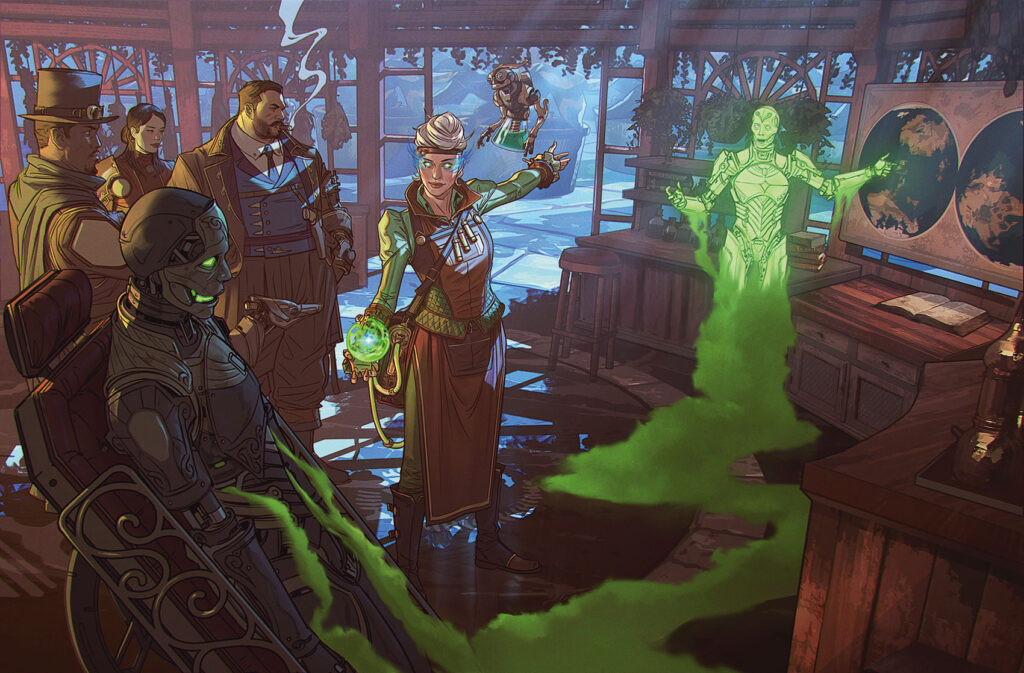
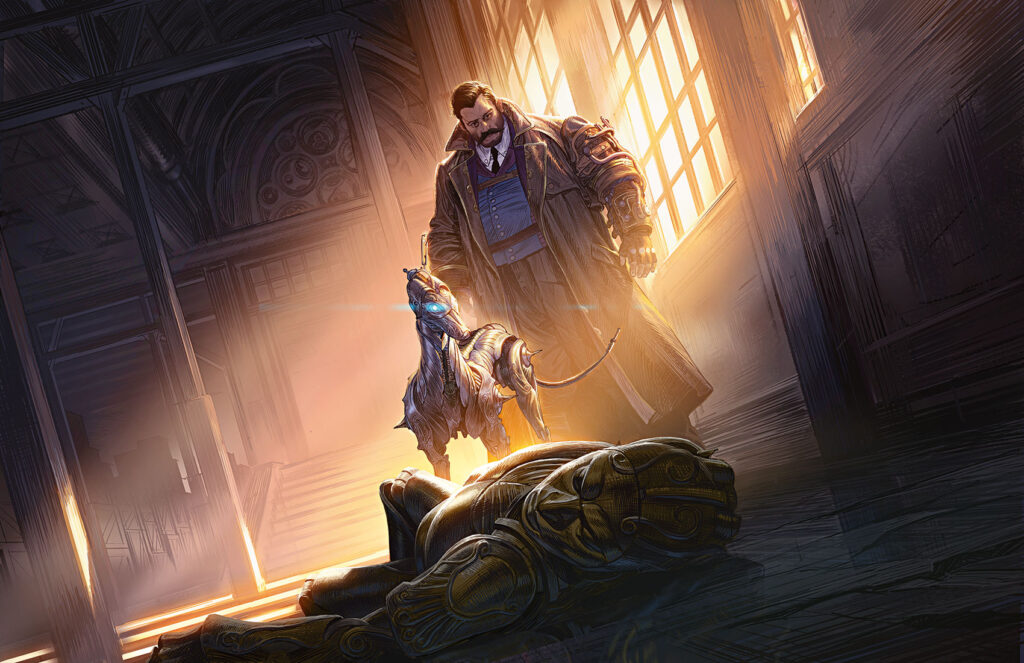
Hence, Warbound Diaries has officially curated a collage of epic and spectacular artworks meant to perfectly elicit the ambiance of Warbound; behold the Warbound Gallery!
Behind the Gallery
This fine array of artworks by a myriad of different artists are a stunning and beautiful display sure to arouse awe and wonder, as all fantasy so excellently does, but this gallery is primarily designed to convey the tone and brand of Warbound.
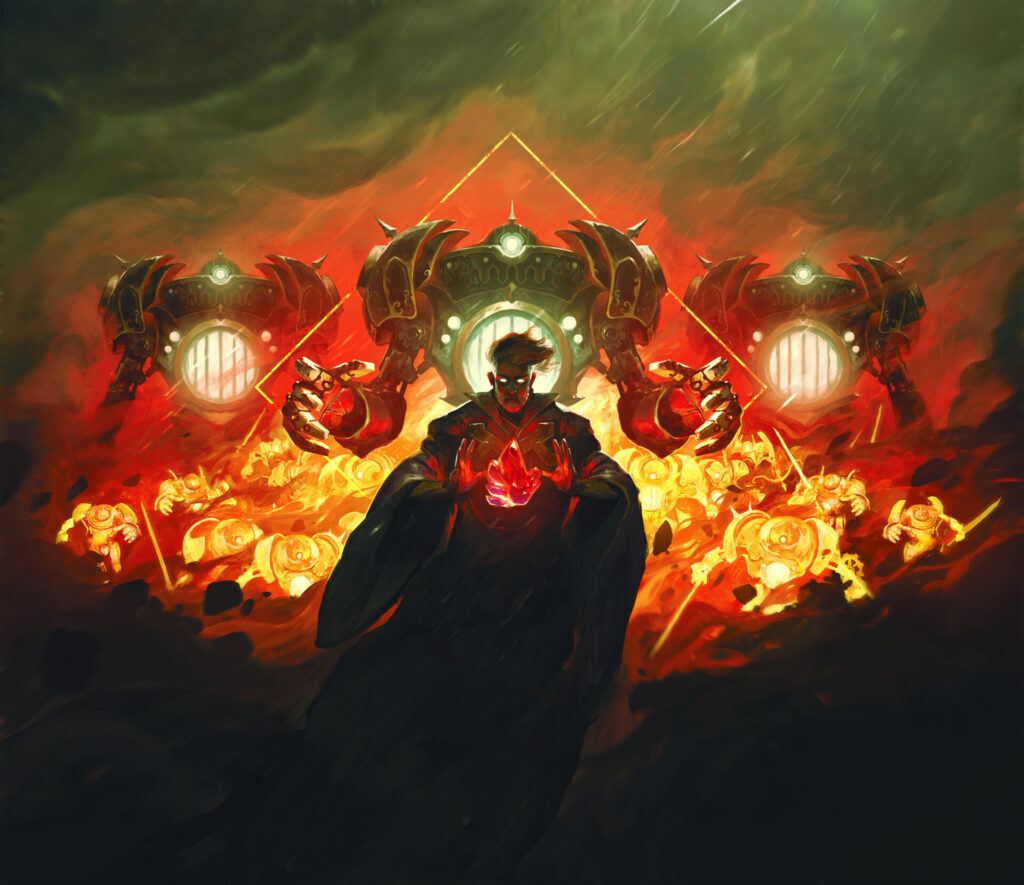
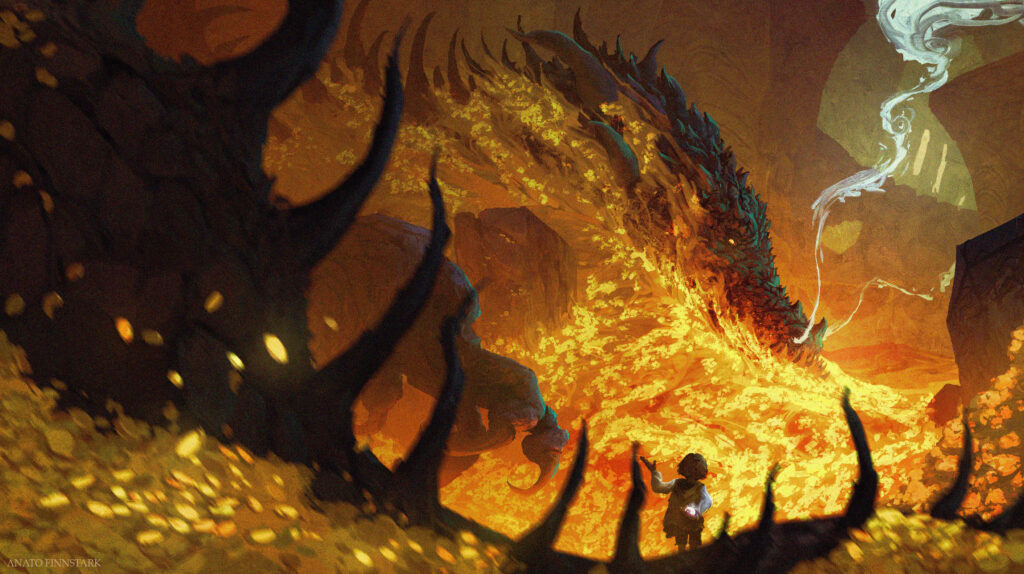
The word “war” is in the title and that is no frivolous choice; when we enter Warbound, it is a world beset by fire and blood, bullets and blades. “Worlds at War” channels the essence of this conflict by the masterly work of Dominik Meyer and Anato Finnstark, with striking, evocative images of soldiers and dragons in solid colors of bloody crimson, fiery oranges, and mournful blacks.
These images properly demonstrate the toll, the devastation that has been wrought in the lands.
Another element that has been largely left unremarked upon is:
Who is fighting in Warbound?
Well, that isn’t the case any longer, as the gallery reveals the two warring sides of this conflict, Khorvaire against Draconia.
This was a particular opportunity I wanted to seize upon with the creation of the gallery, since it’s incredibly significant that both Khorvaire and Draconia—our countries at war—share equally strong and contrasting visual identities.
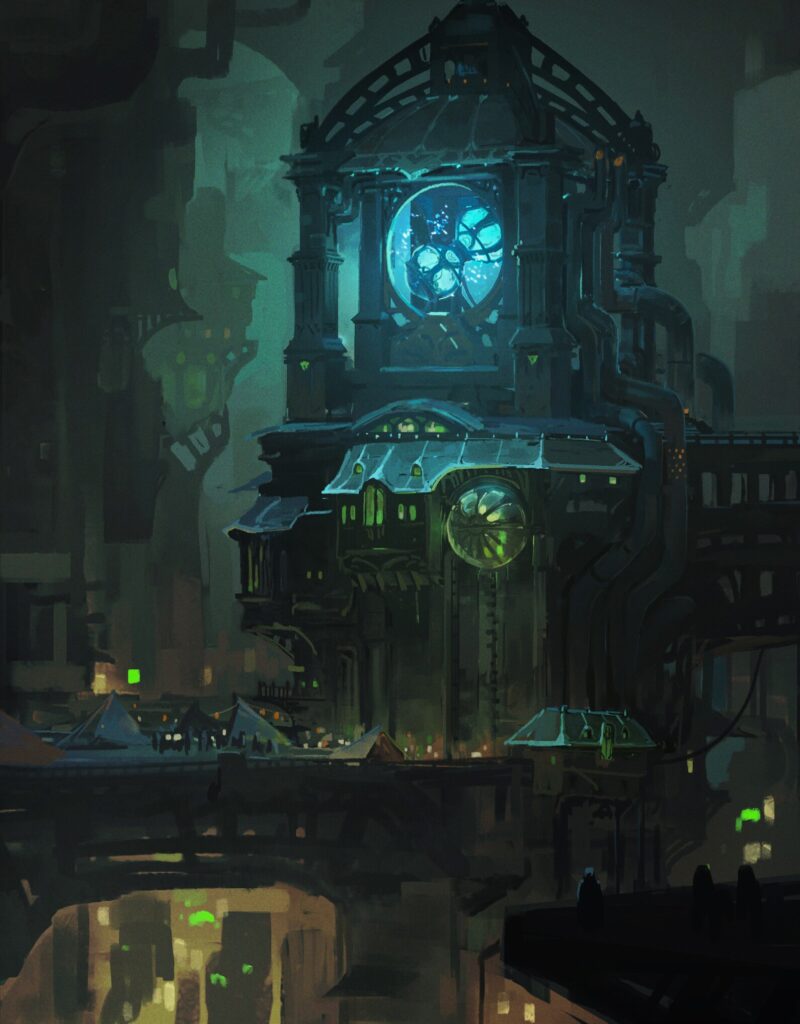
Thus, the Khorvaire gallery features a number of illustrations of fantasy gothic cities and brutalist metropolises, rampant urbanization and technological advancement, all mostly of cool colors and sickly green hues; the smog of industry is choking this continent out.
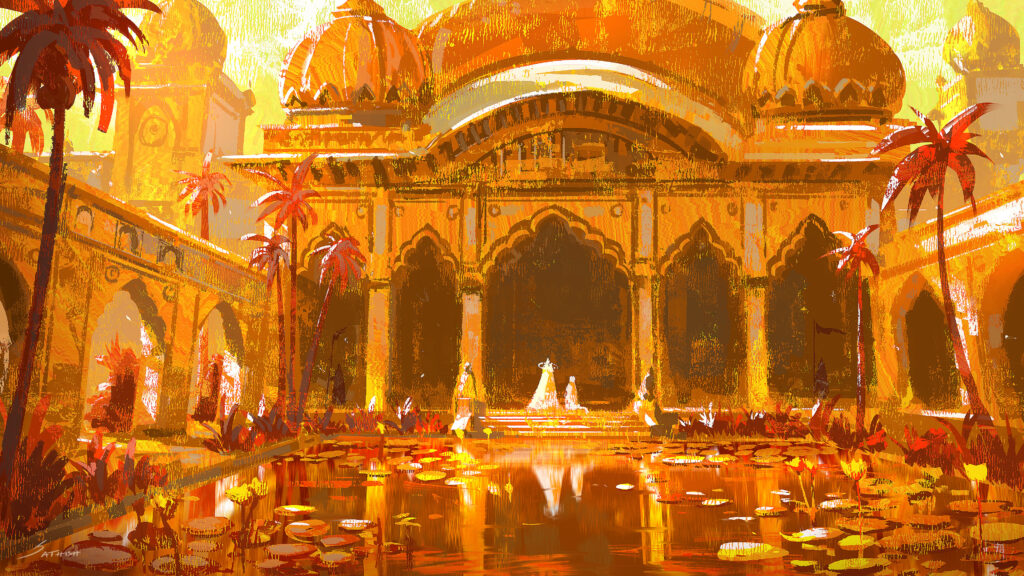
Draconia is a juxtaposition to Khorvaire, so the artworks are of barren deserts and wastelands, spiritualistic cities and monasteries, great lurking beasts, and monolithic structures fallen and sunken to the earth; a warm color palette of orange and yellow with highlights of blue and green.
My hope is that this gallery animates the world of Warbound for you, a veritable orientationfor this hardened landscape giving it life and breath enough for you to animate a world of your own. And also to just admire some really cool art. Please visit the gallery above! And never forget to…
Doesn’t take a thinker to know why the game is titled Dungeons & Dragons. It’s not for the taverns or the mage towers or even the edgy rogues that never show up to campfire show-and-tell.
No, D&D is about dragons and their domains; the absolute jewel of mythical beasts, spitting fire and poison to guard mounds of invaluable treasure. Now, I’m being deliberately glib only to prove a point, because D&D is never dependent on anything to be memorable.
You can make whatever possible in your own worlds and have it be entirely removed of dragons, especially because of what they impose on the part of tone and setting.
But what I’m proffering is that: there is an irrevocable draconic identity built into the bones of D&D, one that shouldn’t go unaccounted for. Like an invisible contract, people expect dragons; they are tradition! Dragons sit atop a hoard of gold, fending it from the lauded heroes. This is fantasy.
You might balk at this. You might believe that dragons are out, a tired, iterative remnant of the fantasy genre that you want no part of! Why insert an obligatory monster, like the dragon, when I can include a much more interesting, subversive beast: the flumph!
Well, you’re partially right. When I began experimenting with the world of Warbound, I, too, was reluctant to write dragons into the setting because I was adamant in adhering to the contract of the steampunk genre. I thought that dragons leaned too far into high fantasy—the medieval quest to slay a foul beast—than the sci-fi dystopia of industry that I was going for.
But why is that? Why can’t I have my dragon and eat it too? This got me thinking. It might be a worthwhile practice, a great workout for our worldbuilding muscles: can we believably write monsters into settings that would be initially unusual for them? I, for one, gladly take up the charge to attempt this. So, fellow inventors, the question today is:
Can we make dragons steampunk?
Soaring Into Warbound
In order to bring dragons into Warbound, we will be following the core thematic elements described in The World of Warbound, so please go and read that post before returning to this one!
Steampunk is characterized by its connection to the Industrial Revolution, the Victorian Era, and the Edwardian Era. There’s a reason steampunk is frequently situated between these histories, and that’s for the sheer storytelling promise laden in it.
Intrinsically, steampunk acts as commentary on imperialism, slavery, government corruption, and unchecked innovation. These central themes will serve as the cornerstone for which we integrate our draconic bestiary.
But I’d be remiss to mention that Eberron—the D&D campaign setting that is the foundation for Warbound—already has a host of dragons within it: The Progenitor Dragons. That means we will fortunately be spared the task of fabricating dragons from scratch.
The first requirement I will need for dragons in Warbound is what I feel is distinctly absent from dragons in any customary D&D world: mystique and enigma. For too long have dragons lost this sense of unfathomability, of ancient magic and bewildering scale, that I feel is necessary to make dragons feel fresh and mystifying.
This is a consequence of writers’ obsession with applying science and factual accuracy to what shouldn’t be. There are even whole sections of the Forgotten Realms wiki dedicated to explaining the dietary processes of dragons. We won’t concern ourselves with anything of the like, because our goals here are to:
Make dragons feel unknowable and esoteric.
Conceptually conform dragons to the steampunk genre.
Enhance the fear factor of dragons.
Detailing the deeper biology of dragons goes directly counter against our first goal, so how can we accomplish it? Ironically, Eberron directly gives us the answer: mythology.
Dragon as Gods
Unlike the depiction of dragons elsewhere in D&D, The Progenitor Dragons of Eberron are a cosmological legend, but also a theological one. Dragons created the world, but they also destroyed it, which perfectly empowers dragons in the way we need; less beast, and more deity.
So, what if we take that mythologizing of dragons even further?
What if all dragons were godlike and deified?
What if all dragons are gone and buried in mythology?
This formula is a prime recipe for granting dragons that enigmatic quality we’re looking for. Secondly, we can weaponize their absence in the world to further compound their legends in-world. All accounts of dragons would be second-hand, paintings on cave walls instead of documented in tome and text.
Now, we can illustrate the dragons in the very arcane, mystical light we’re seeking, almost identical to the way we speak of the Ancient Greek pantheon or of the Big Bang.
But with this framework settled, how do we blend it with our steampunk design? Simple: war.
Dragons Made Clockwork
There was another historical connection that I neglected to mention, and that was war. You see, the eras that steampunk occurs in are rife with conflict and regional crises that often go unnoticed. What if we made notice of it through the vessel of dragons?
Many a war is waged over religion and resource; we can combine these motivations because dragons are gods in Warbound. And here, fellow inventors, was the impetus for the conceit of Warbound.
What if the cause of a great war was because of dragons?
If the earth of Eberron is that of a dragon carcass, what if humanity harvests it for its blood?
What if that blood is an essential fuel for the economy of the world, the equivalent to that of petroleum?
With these questions drifting in our mind, I feel we are in an ideal position to begin writing the consequences of such a world. Let us brainstorm and witness our world flourish before our very eyes!
What kind of international conflict would arise if dragons were gods, and how would their absence in it influence said conflict?
Great work, inventors. Don’t let the counters of genre define what you want the shape of your world to take. You want dragons? Then, why not have dungeons of them!
If you’re seeking more inspiration, I refer all my inventors to seek out the excerpt of my short story, “The Mad Mage“, where we further the exploration of corrupt innovation!
Eberron: Forge of the Artificer is less of the expansion it was purported to be and more of a refurbishing, a safe orientationof a rustic, yet cherished D&D campaign setting. It failed to truly renovate its rich and treacherous world for newer audiences.
Released on December 9th, 2025 by Wizards of the Coast, Eberron: Forge of the Artificer was poised to reintroduce the Eberron setting back into the mainstream D&D catalogue, revitalizing it for the latest version of D&D fifth edition.
You see, the last official transfusion of content Eberron has received was in 2019 in the form of Eberron: Rising from the Last War, and it was a 320-paged atlas brimming with exciting, fantastical lore and dense, interesting mechanics.
Since then, Wizards of the Coast decided to update D&D fifth edition in 2024, promising a new launch for all iconic D&D settings and rules.
Naturally, this left fans of Eberron wondering how their war-torn world will fit into the schematics of this new update.
Yet, Eberron: Forge of the Artificer should’ve rekindled some of the fires in those furnaces, because for its steep price, inaccessible design, and misdirected quality of writing, this sourcebook becomes a faulty patch for any to cross into the world of Eberron.
Price Unbefitting the Content
Eberron: Forge of the Artificer is approximately thirty US dollars.
That is 10 dollars less than its stocky predecessor, meaning that Forge of the Artificer should boast enough content to at least rival that of Rising from the Last War.
But it doesn’t.
Forge of the Artificer promotes a series of rule revisions, about 50 player options, new spells and mechanics, and 3 storytelling frameworks for potential campaigns—and it still doesn’t compare to the meaty content offered in previous installments.
Forge of the Artificer hosts 112 pages.
Rising from the Last War hosts 320 pages.
The page count encapsulates this disparity in content, and this cannot be a mere difference in ten dollars between two widely different products.
This 2025 release features a noticeable dearth of maps, a valuable resource for game masters and writers but this is somewhat rectified by the sheer quantity of stunning artwork.
The art of Eberron seemingly reorients the setting back into a meld of arcane noir and industrial pulp fiction. Previous versions were resistant to adopting steampunk as an aesthetic, which only polarized fans.
This new art direction is a flight in the right steamship.
Inacessible Components
Eberron: Forge of the Artificer is drastically underwritten for its price and it often defers to its 2019 release for relevant information.
For thirty US dollars, consumers can pay to be recommended they purchase an additional, older sourcebook that is pricier than the one they are currently reading.
This is no standalone product, because it predicates its content on ownership of other sourcebooks.
It’s a plain misstep for what should be a relaunch, but it instead becomes a thin supplement.
Misdirected Writing
Forge of the Artificer is releasing in the advent of a new D&D edition, drawing droves of new players to new settings.
To have the writing of Forge of the Artificer gloss over any regional, historical, or background information in favor of material revision is a colossal oversight.
Huge swaths of the setting lore is unaddressed for new readers.
What best encapsulates this false direction is the bestiary of Forge of the Artificer, which hosts a number of statblocks for monsters to use in campaigns. One of them is a “Daask Raider”.
What is a Daask?
Well, there’s about three paragraphs worth of information to learn that, and it’s attached to the very statblock in the bestiary. Wonderful.
Sparking Nothing
Eberron needs to forge a new path, or flee from the one they’re headed.
If Eberron is to survive this new cycle of D&D canon, there needs to be more attention and care in building up the world of Eberron, not the forge of some anonymous artificer. It’s almost a comedy to witness the hesitancy of WOTC.
They should seek to build hype about playing in this technological, magical world,not fabricate an artificial update that appeases nobody but old fans and shareholders.
Whirring gears, clacking cogs, and hissing steam; when it comes to living in Eberron, these are nonnegotiables. There isn’t a corner of land without mutationby the oils of industry.
The stench of invention is thick in these lands, so embrace a cutthroat life of action and high stakes. Nobody’s safe from becoming a story or a mystery, and there are no heroes. Always problems but never enough solutions to go around.
Warbound takes place in the world of Eberron, built from the carcass of a dragon deity. Two continents have been at war for a decade, but a sudden reversal causes a battalion to be left marooned on enemy territory. With no other choice, the battalion must trek through insurmountable dangers to return to their homeland.
This Eberron campaign will be a low-magic setting. This means items that replicate magical effects are more common than the somatic evocation of magic.
Core themes in Warbound: War, Distance, and Erosion.
Two opposing things in conflict, clashing dualities. When does the battle end? How long will the battlefield stretch before it engulfs everything? Is peace best achieved in one stead or the other?
Gaps and spaces, the distance between. How far apart can people be before they change irreparably? How far can you distance yourself from a person, a philosophy, or a history?
What do you lose during war and what do you lose after it? What has been weathered from your identity thereafter? Is what is left after the friction good? Gradual loss of integrity through attrition and resistance.
While I will be using Eberron as a basis for convenience and efficiency, this version of the renowned D&D setting will be mine own.
If you’re looking to witness the story unfolding, you should visit the official Warbound: A Steampunk Odyssey channel, where you can find full-length recordings of sessions and bonus content, such as session zeroes and animatics.
We’ll see you in the workshops, inventors and thinkers!

Leave a Reply