Doesn’t take a thinker to know why the game is titled Dungeons & Dragons. It’s not for the taverns or the mage towers or even the edgy rogues that never show up to campfire show-and-tell.
No, D&D is about dragons and their domains; the absolute jewel of mythical beasts, spitting fire and poison to guard mounds of invaluable treasure. Now, I’m being deliberately glib only to prove a point, because D&D is never dependent on anything to be memorable.
You can make whatever possible in your own worlds and have it be entirely removed of dragons, especially because of what they impose on the part of tone and setting.
But what I’m proffering is that: there is an irrevocable draconic identity built into the bones of D&D, one that shouldn’t go unaccounted for. Like an invisible contract, people expect dragons; they are tradition! Dragons sit atop a hoard of gold, fending it from the lauded heroes. This is fantasy.
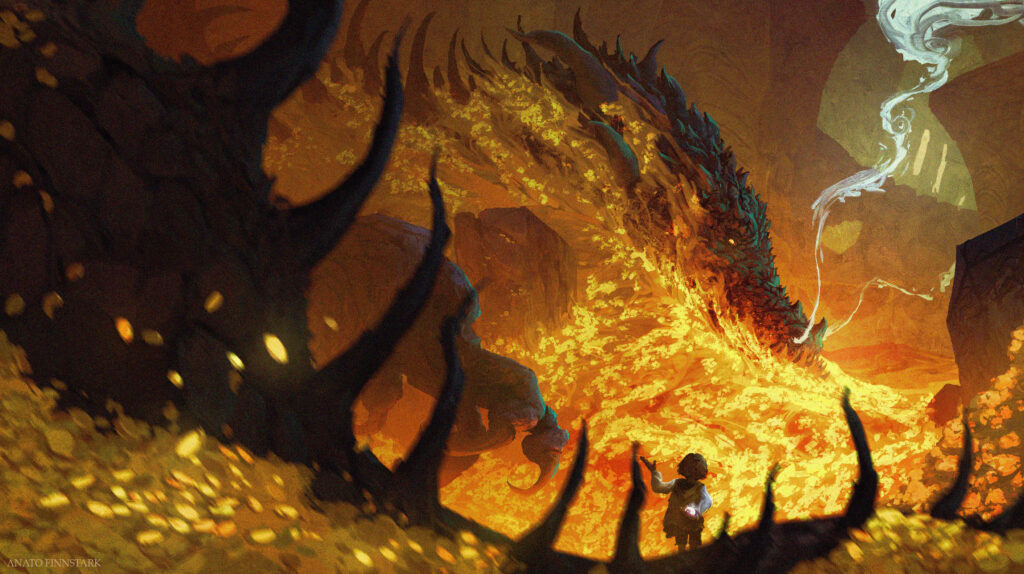
You might balk at this. You might believe that dragons are out, a tired, iterative remnant of the fantasy genre that you want no part of! Why insert an obligatory monster, like the dragon, when I can include a much more interesting, subversive beast: the flumph!
Well, you’re partially right. When I began experimenting with the world of Warbound, I, too, was reluctant to write dragons into the setting because I was adamant in adhering to the contract of the steampunk genre. I thought that dragons leaned too far into high fantasy—the medieval quest to slay a foul beast—than the sci-fi dystopia of industry that I was going for.
But why is that? Why can’t I have my dragon and eat it too? This got me thinking. It might be a worthwhile practice, a great workout for our worldbuilding muscles: can we believably write monsters into settings that would be initially unusual for them? I, for one, gladly take up the charge to attempt this. So, fellow inventors, the question today is:
Can we make dragons steampunk?
Soaring Into Warbound
In order to bring dragons into Warbound, we will be following the core thematic elements described in The World of Warbound, so please go and read that post before returning to this one!
Steampunk is characterized by its connection to the Industrial Revolution, the Victorian Era, and the Edwardian Era. There’s a reason steampunk is frequently situated between these histories, and that’s for the sheer storytelling promise laden in it.
Intrinsically, steampunk acts as commentary on imperialism, slavery, government corruption, and unchecked innovation. These central themes will serve as the cornerstone for which we integrate our draconic bestiary.
But I’d be remiss to mention that Eberron—the D&D campaign setting that is the foundation for Warbound—already has a host of dragons within it: The Progenitor Dragons. That means we will fortunately be spared the task of fabricating dragons from scratch.
The first requirement I will need for dragons in Warbound is what I feel is distinctly absent from dragons in any customary D&D world: mystique and enigma. For too long have dragons lost this sense of unfathomability, of ancient magic and bewildering scale, that I feel is necessary to make dragons feel fresh and mystifying.
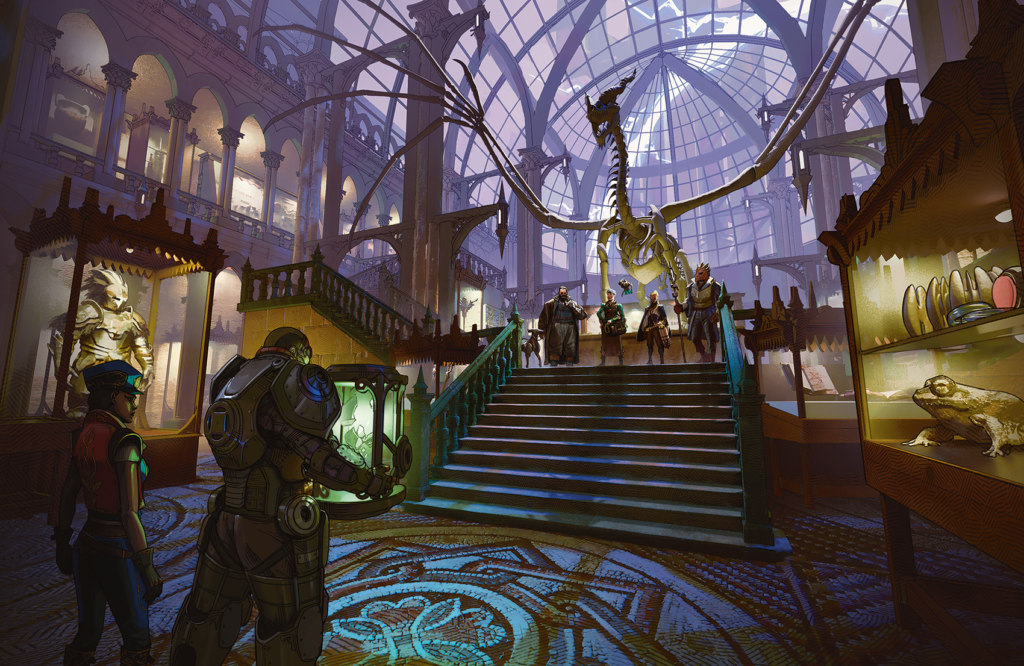
This is a consequence of writers’ obsession with applying science and factual accuracy to what shouldn’t be. There are even whole sections of the Forgotten Realms wiki dedicated to explaining the dietary processes of dragons. We won’t concern ourselves with anything of the like, because our goals here are to:
- Make dragons feel unknowable and esoteric.
- Conceptually conform dragons to the steampunk genre.
- Enhance the fear factor of dragons.
Detailing the deeper biology of dragons goes directly counter against our first goal, so how can we accomplish it? Ironically, Eberron directly gives us the answer: mythology.
Dragon as Gods
Unlike the depiction of dragons elsewhere in D&D, The Progenitor Dragons of Eberron are a cosmological legend, but also a theological one. Dragons created the world, but they also destroyed it, which perfectly empowers dragons in the way we need; less beast, and more deity.
So, what if we take that mythologizing of dragons even further?
- What if all dragons were godlike and deified?
- What if all dragons are gone and buried in mythology?
This formula is a prime recipe for granting dragons that enigmatic quality we’re looking for. Secondly, we can weaponize their absence in the world to further compound their legends in-world. All accounts of dragons would be second-hand, paintings on cave walls instead of documented in tome and text.
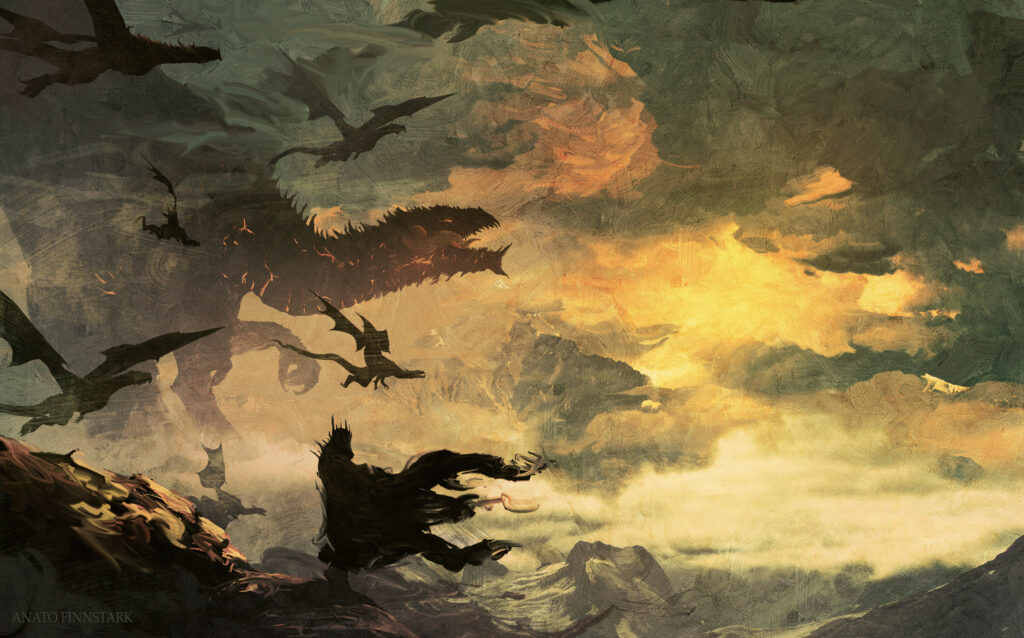
Now, we can illustrate the dragons in the very arcane, mystical light we’re seeking, almost identical to the way we speak of the Ancient Greek pantheon or of the Big Bang.
But with this framework settled, how do we blend it with our steampunk design? Simple: war.
Dragons Made Clockwork
There was another historical connection that I neglected to mention, and that was war. You see, the eras that steampunk occurs in are rife with conflict and regional crises that often go unnoticed. What if we made notice of it through the vessel of dragons?
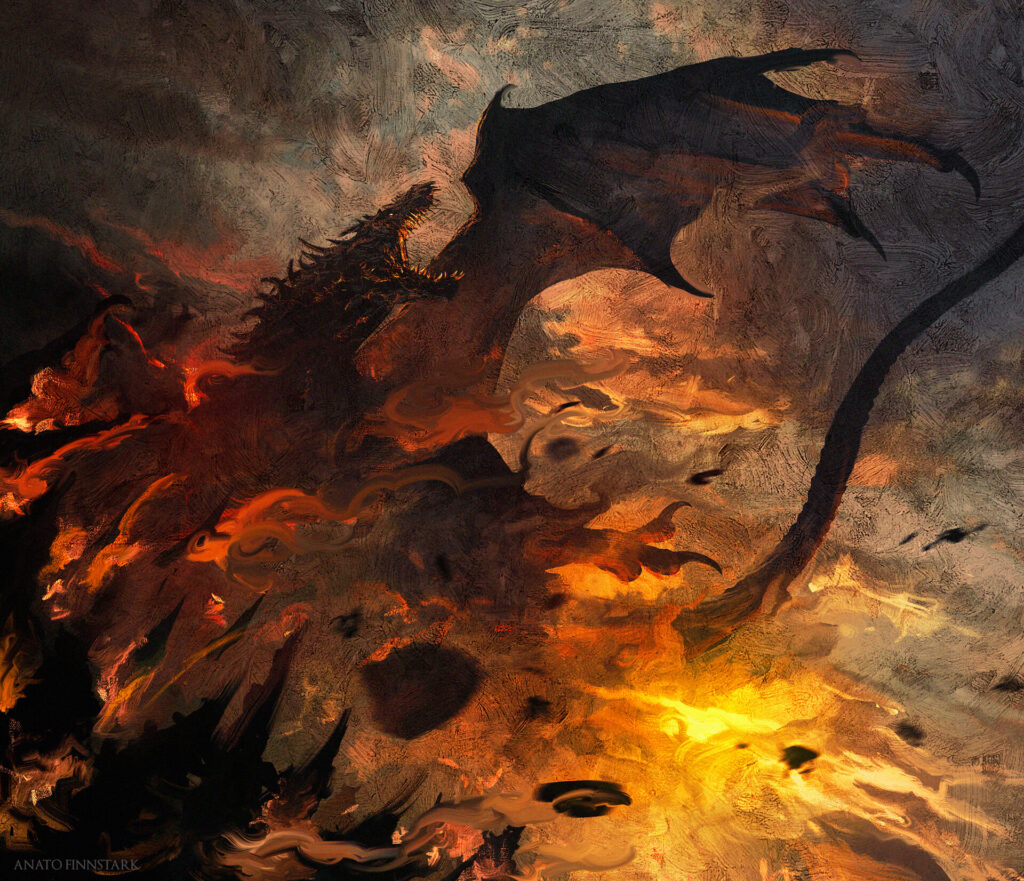
Many a war is waged over religion and resource; we can combine these motivations because dragons are gods in Warbound. And here, fellow inventors, was the impetus for the conceit of Warbound.
- What if the cause of a great war was because of dragons?
- If the earth of Eberron is that of a dragon carcass, what if humanity harvests it for its blood?
- What if that blood is an essential fuel for the economy of the world, the equivalent to that of petroleum?
With these questions drifting in our mind, I feel we are in an ideal position to begin writing the consequences of such a world. Let us brainstorm and witness our world flourish before our very eyes!
- What kind of international conflict would arise if dragons were gods, and how would their absence in it influence said conflict?
Great work, inventors. Don’t let the counters of genre define what you want the shape of your world to take. You want dragons? Then, why not have dungeons of them!
This post was partially inspired by the work of Aether and Ink, who created this video: “A Different Way to Write Dragons”, and Hello Future Me’s, “On Worldbuilding: Dragons Part One“. Check them both out!
If you’re seeking more inspiration, I refer all my inventors to seek out the excerpt of my short story, “The Mad Mage“, where we further the exploration of corrupt innovation!
Leave a Reply